Mentoring new medical students
Dear First Year Medical Students
The study of medicine is exciting, but also challenging. Every medical student experiences stress at one time or the other. Stress may be brought on by academic factors, but often the causes may be personal. The situation may be over-whelming and might impact academic achievement; access to support should be provided by the institution and is reported to be helpful.
The University College of
Medical Sciences is committed to assisting students develop tools to deal with
stress and other difficulties.The Mentoring Program is one such initiative in this direction.
Also read about our experience with mentoring

The Introductory Meetings between
Mentors and first year student mentees
were held in September 2011
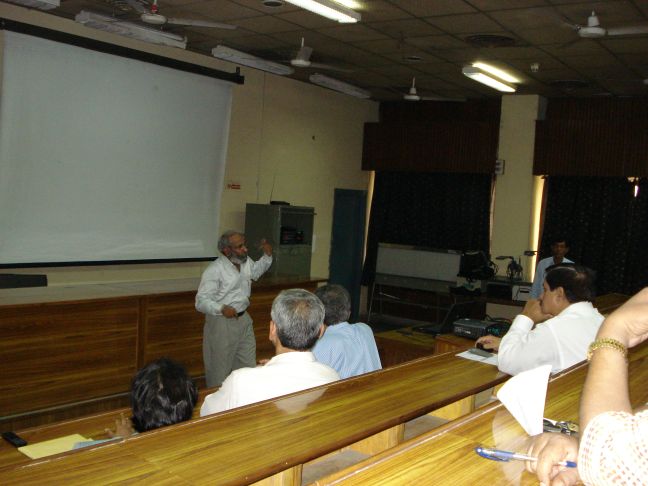
Prof. Visweswaran, IIT Delhi, talks to the UCMS faculty about mentoring
What is mentoring?
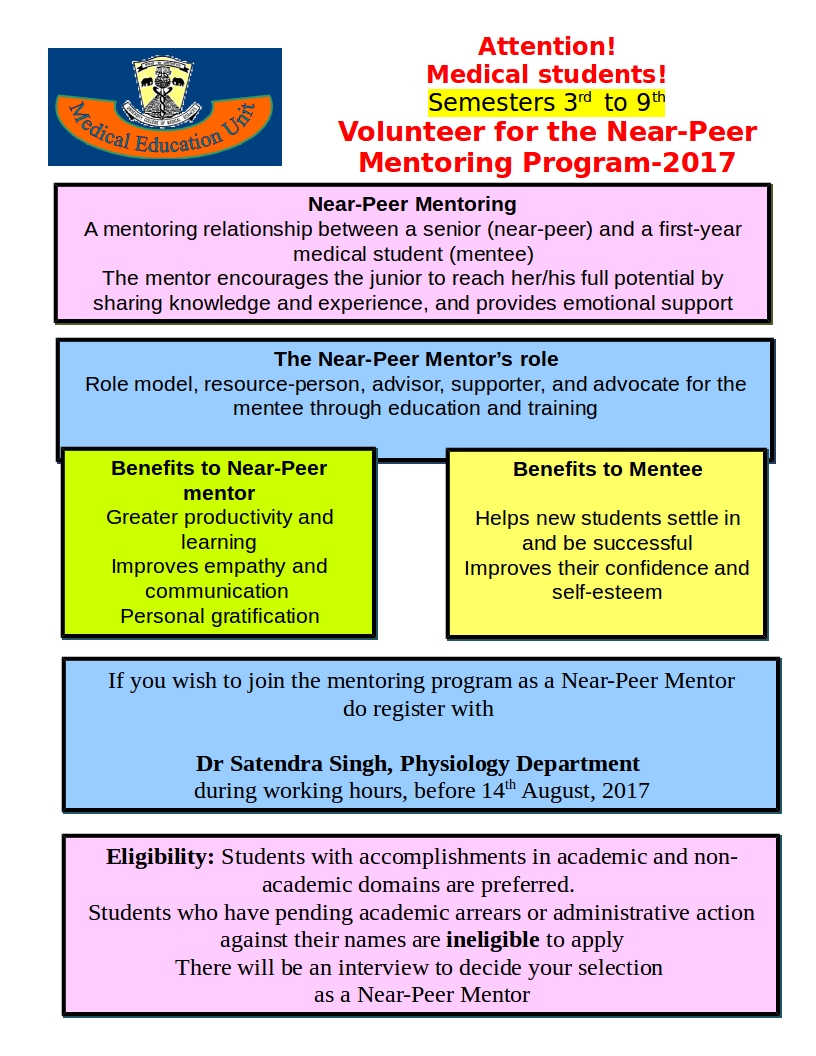
A long-term relationship between a mentor and a mentee (protégé) where the mentor encourages the mentee to reach her/his full potential by sharing knowledge and experience, and provides emotional support and encouragement
Who can be a mentor?
Older and wiser colleagues; thus, both faculty and senior students can mentor a new medical student
What is the mentor’s role?
Teacher, role model, resource, advisor, supporter, and advocate
Guides and supports the mentee through education and training
May convey explicit academic knowledge that is required to master curriculum content
Can enhance knowledge about the “hidden curriculum” of professionalism, ethics, values and the art of medicine not learned from texts
How does the mentee benefit?
Mentoring, more than teaching, helps students be successful
The mentor can enhance the mentee’s sense of confidence and increase his or her self-esteem by simply being genuinely interested in the mentee’s development
Is the mentor benefitted too?
Mentors experience greater productivity, career satisfaction, and personal gratification
Mentoring skills are valuable assets for medical teachers, who help shape the professionalism of future generations of doctors.
Recommended “Do’s and Don’ts” for Enhancing the Relationship between Mentors and Protégés
|
Mentor Do’s |
Mentor Don’ts |
|
Be available |
Promote your own agenda |
|
Convey respect and confidence |
Use “free labor” |
|
Focus on mentee, ask questions |
Take credit |
|
Track progress, give feedback |
Make a “clone” |
|
Identify strengths, reassess |
|
|
Protégé do’s |
Protégé don’ts |
|
Be punctual, set agendas |
Avoid decisions |
|
Follow through |
Rely exclusively on mentor |
|
Communicate, accept critique |
Acquiesce |
|
Convey respect, show appreciation |
Over idealize |
|
Accept challenge, reassess |
|
References
1. Van Dyke is teacher, mentor, ‘ultra-bean’. Med Ed Update. University of Iowa, medical education community. May 28, 2008. Accessible at http://medcom.uiowa.edu/meded/
2. Rose GL, Rukstalis MR, Schuckit MA. Informal Mentoring Between Faculty and Medical Students. Acad Med 2005;80:344–8.
3. Swanson KE. Mentorship Manual for Medical Students. 2001. Accessible at http://www.womeninmedicine.vcu.edu/PDF/MentorshipManual.pdf